Coming in 2027
This book invites readers to rediscover the three virtues that Christians across the centuries have regarded as the heart of the Christian life. Far from sentimental feelings or inspirational slogans, faith, hope, and love are habits of seeing and living—gifts of grace that draw us toward God and transform the way we understand ourselves, our neighbors, and the world. Drawing deeply from Scripture and the wisdom of Christian thinkers like Augustine, Aquinas, Boethius, and Basil the Great, this book brings the theological virtues into conversation with the questions and pressures of contemporary life. What does faith look like in an age suspicious of truth and divided by ideology? How can hope sustain us through troubling times and give us a vision for our common life? What does it mean to love when desire is continually shaped by consumerism, self-expression, and the pursuit of individual fulfillment?
For readers seeking a deeper understanding of Christian faith—and for anyone wondering what it means to live a genuinely human life—Among Forgotten Words offers an invitation to recover an ancient vision: faith that seeks truth, hope that perseveres, and love that gives itself away.


What if it is not the ‘divinity’ of Jesus that causes problems for historians, but his humanity? To insist that Jesus was fully human, as both theologians and historians do, still leaves us with the question of what it means to be human. Further, historians often misunderstand the historiographical implications of classical Christology. This book offers a new path toward the reconciliation of these disciplines by focusing on human knowledge and subjectivity, which are central issues in both historical method and Christology.
Endorsements & Reviews
-
“This remarkable book constitutes a significant contribution to contemporary Christology. The author offers a deeply insightful analysis of the relationships that obtain between conciliar Christology and modern historical-critical scholarship. He does so while advancing scholarly understanding of Aquinas' philosophy and theology in reference to Christology, in ways that have real significance for Christian ecumenism. The treatment of the knowledge of Christ in historical context is seminal and provides a reference work for future reference and debate. A first rate theological work.”
-
“This book compellingly argues that research into the identity of Jesus is tied up with metaphysical commitments of some sort, though the nature and function of these commitments is often hidden from view. Austin Stevenson brings them clearly into the light of day. Only an author who understands the issues deeply could have written so lucidly about them. This book is anything but a facile rejection of historical research. Rather, it challenges its readers to think about what history means and to bring history and theology into dialogue with one another.”
-
“This work argues that Thomas Aquinas's participatory metaphysics and epistemology -- including his understanding of prophecy and of Jesus's beatific vision -- can assist powerfully in the resolution of certain potent puzzles about the apocalyptic Jesus, as well as in the development of a historical biblical scholarship that is appropriately critical in facing its own philosophical premises. Persuasive in its applications to Jesus scholarship and sure-handed in its interpretations of Aquinas, the book represents a major advance. It will be of significant help to theologians and biblical scholars seeking ways to enable the erudition of the each discipline to instruct the other.”
-
“Stevenson argues that the theology of Thomas Aquinas can provide excellent resources for making sense of the Gospel narratives in a way utterly compatible with classical or conciliar Christology, and he attempts to show this by giving an account, by and large accurate, of what Aquinas has to say about the varieties of Christ’s human knowledge. . . one of the more interesting sections of the book is a brief but careful discussion of the ways in which notions of consciousness have come to be included, in an almost casual way, into discussions of the theological concept of person—a tendency which Stevenson rightly notes is utterly ahistorical.”
Journal of Theological Studies, https://doi.org/10.1093/jts/flaf035
-
“Austin Stevenson’s The Consciousness of the Historical Jesus is a stellar monograph contribution to these ongoing debates on the knowledge of Christ, greatly expanding the scope of the discussion beyond what Lonergan in his Gregorian lectures termed the “constitutio psychologica Christi,” and embracing questions on the more fundamental relationship between metaphysics, biblical exegesis, and historical method.” (Jose Isidro Belleza, University of Cambridge)
Thomistica, https://thomistica.net/book-reviews/https/thomisticanet/quaestiones-url/consciousness-historical-jesus
-
“Stevenson's work is impressive not only for its clarity but also for its sheer breadth of engagement with scholarly sources. Additionally, Stevenson provides an admirably lucid explication of Aquinas's theory of human cognition . . . a notoriously difficult topic, which serves as something of a prelude to his thorough account of Aquinas's doctrine of Christ's knowledge.”
International Journal of Systematic Theology
https://doi.org/10.1111/ijst.70015 -
“Stevenson’s book is technical and learned, demanding careful engagement with Thomistic metaphysics. Nevertheless, the clarity of the presentation and its enjoyable nature make the material worth reading. For those with an interest in classical Christology, this book proves to be a great resource. . . For those interested in exploring Thomistic scholarship from multiple perspectives, ranging from virtue theory to Thomas’s classical metaphysics, Stevenson’s book is an exceptional guide.” (Rafael Bello, Oklahoma Baptist University)
Themelios: The Gospel Coalition Review https://www.thegospelcoalition.org/themelios/review/the-consciousness-of-the-historical-jesus-historiography-theology-and-metaphysics/
Coming November 2026
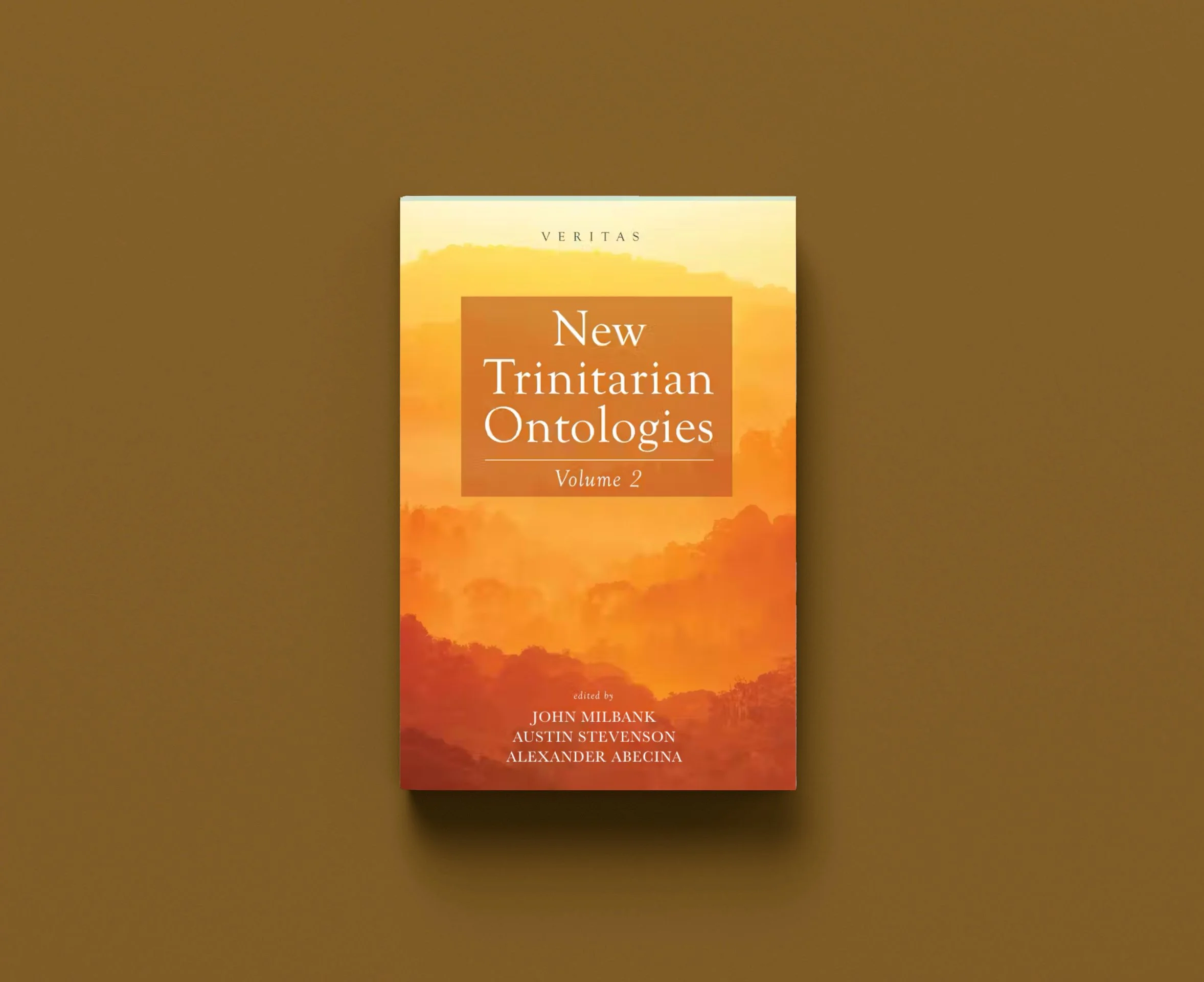
If ontology cannot contain but rather more radically points to God, and if all nature thus tends towards the supernatural, then we should renew the study of the metaphysics or ontology of the Trinity. This volume represents a second collection of responses to the challenge of rendering ontology in a Trinitarian style.
Trinitarian Ontology After Kant, by Philipp W. Rosemann
Trinitarian Ontology and the Positivity of Being: Gustav Siewerth and Hans Urs von Balthasar in Conversation with G. W. F. Hegel, by Michael Schulz
Ontology After Epistemology: Nicholas of Cusa’s Trinitarian Definition of All Things, by Johannes Hoff
Bonaventure’s Trinitarian Ontology, by Andrew Davison
Towards a Negative Trinitarian Theology, by Olivier Boulnois
Thomas Torrance (1913–2007) and the Patristic Trinity, by Mark Edwards
Origen Between Apophatic Theology and a New Trinitarian Ontology: Unity of Divine Nature and Will, Hypostases, and Legacy, by Ilaria Ramelli
The Spirit of Wisdom: Sergius Bulgakov’s Sophianic Trinitarian Ontology in Dialogue with Contemporary Biology, by Celia Deane-Drummond
The Embodied Logos: Reason, Knowledge, and Relation, by Rowan Williams
New Trinitarian Ontologies? Trinitarian Theology, Theological Anthropology, and Contemporary Critical Consciousness in Dialogue, by Theresa Grace Brown